Friday, October 10, 2014

Lakes Can Be Amazing


Lakes Can Be Amazing


After weeks of preparation and logistics, as well as hours of travel, my father and I, along with 7 other members in our Boy Scout troop, arrived at the Charles L. Sommers canoe base in Ely, Minnesota for a 7-day canoe trip in the boundary waters between Canada and the United states. This base is part of the Northern Tier High Adventure Program. We had watched the movies, and seen the wallpapers, but now it was time to experience nature for real. Charles L. Sommers was in the middle of nowhere; there was nothing but crisp pine trees and lakes for miles around. After we checked in, the staff members handed us our gear, gave us a short orientation, and showed us our cabins for the night. We would leave early in the morning.
My dad said the packs we were taking were heavy, but I never thought how heavy. Each crew of 9 people get around 6 large packs to carry all the personal gear, food, supplies, and cooking utensils needed for the trip. Everything was carried with you, including the canoes. This worried me a lot, especially since the 90-pound burden almost made me fall over immediately. By the time we launched our canoes into the lake, our whole crews’ backs were already aching. We would be experiencing that feeling a lot throughout our trip.
Paddling on a crystal clear lake is probably one of the most peaceful things to do on the Earth. The water stretches for miles, and the only sound you can hear is your paddle dipping in, then out. Bald eagles skim the surface of the lake, hunting for the large fish swimming in the shallows. However, the land approaches as the water ends, and the weak of heart go back to the canoe base. Our crew had other ideas…
There is an opening in the evergreen forest, with a narrow, rough trail lying inside it. If we wanted to get the miles on this trip, it all started at this portage. Taking up our packs, and lifting the canoes over our heads, we trekked past the point of no return and struggled to the next lake. I came to dread these “portages”, carrying all our heavy gear and canoes on land, but it was necessary to get to the places we wanted to go to. Step by step, I carried my pack down halfway through the trail before I stumbled, slipped on a rock and fell backwards. Dazed, yet determined, I used all my strength to get back on my feet and continue onwards. The only driving motivation in a portage is the water you can see at the other side.
Since these lakes are hard to reach, and isolated, the fishing there was probably the best you can get this side of the Western Hemisphere. We caught 20-30 inch Pike, Bass, and Lake Trout as easily as those fishing toy games. On the second day, my friend Seth had a 31-inch Northern Pike on the line as soon as he had reeled in another fish! I was surprised, because the lakes are so vast and deep you would think the fish would be spread out far and few in between. There were no complaints, though, as fried fish was the best remedy for an aching body.
The third day was one of the longest and hardest days of the trip, especially for my dad. While doing a rough, steep portage, my dad, who was carrying the canoe, stumbles and shouts in pain. He had torn one of his upper groin muscles! This didn’t injure him to the point of calling off the trip, but he had to take ibuprofen every day after. It would take a good month after the incident for him to fully recover.
On reaching our fourth day of the trip, we paddled to Lake MacIntyre, the halfway point in our canoe route. By then, our crew had travelled over 40 miles and portaged around 13 times. To make it back to the canoe base in time, we took a route around one of the large lakes and started heading home. The weather was perfect for five days straight, until a huge storm hit us early in the morning. As soon as the first drop fell, I woke up my tent mates and rushed to put the rainfly over our shelter. Lightning flashed over the lake at around 100 times a minute. It was like someone was shining a strobe light over the whole world! Not to mention the pouring rain and screaming wind. None of us slept well that night.
Finally, we found our way back to the lake where we started and I reflected on everything I accomplished throughout the trip. Our crew travelled over 75 miles by canoe, caught countless fish, and bonded well together in only 7 days. We woke up every one of those days and paddled, rain or shine, and really experienced what it’s like to be with nature. Not only that, I got to test my limits and see my potential. After this trip, I went home and knew how hard work and effort really do pay off.

My Sun, My Love

Her warmth brushes me
And she would die every night
Because she loves me

Thursday, October 9, 2014

Jordan Zapp
Process writing 2- Draft 1
September 29, 2014
Bl 6

Death by Pigeon

            “Can we have some breadsticks?” My little sister asks a man standing outside a restaurant.   He chuckles and nods.  Without hesitation, Anna bolts into the restaurant and then runs back out, her hand full of packaged breadsticks.  She runs toward the square like it’s Christmas. 

            “We have to go!  Hurry!” she yells back at us.  My brother takes off after her. My dad rolls his eyes.  My mom suppresses a laugh.  I just look up.  The buildings that line the narrow streets are brilliant, the bright colors practically shimmering in the July heat.  The black box windows contrasting every building make me wonder what may lie on the other side.  As we cross a small stone bridge, a long, black gondola passes beneath us, complete with a tall man in a red beret.  He sings a beautiful song in Italian and rows lazily down the canal.  Small artisan shops selling colorful glass pieces are stacked like blocks along the cobblestone street, their creations catching and scattering the light. Ah, Venice.

            We had been waiting all day to get to the square.  After touring a million museums and churches (which I enjoyed, while my siblings loudly complained) and stopping for gelato three times (which we all enjoyed), we could not hold in our excitement any longer.   We spilled onto the square and each took in a sharp breath of anticipation.  St. Mark’s Square, or Piazza San Marco, is the buzzing center of Venice, Italy.  Artisan shops, fancy restaurants, gelaterias, and a huge church surround the square.   Vendors set up shop anywhere they please, and yell out to tourists, boasting the best prices.  That is all well and good, but my siblings and I have our eye on one attraction in particular: pigeons. 

            Hundreds of these flying fiends flock the center of the square.    These pigeons are unlike the ordinary birds you might find in New York City.  Around us, other tourists have the right idea.  They hold breadcrumbs in their palms, arms out, and if luck is with them, a few pigeons may land on their arms and feast on the bread.   It is an honor to have a St. Mark’s pigeon land on your arms, or at least it makes for a good story.  Anyway, my siblings and I get right to it, crushing the breadsticks in our hands and holding them out for the pigeons to snack on.    Much to our delight, several birds land on our arms, their small talons digging into the sleeves of our shirts.  They peck away at our palms, snatching up breadcrumbs as fast as lightning. 

            At first, there were two pigeons on either of my arms, then came another, and another, and another, until birds were stacked up to my shoulders.  I laughed nervously, but hey, they were just pigeons, right?  Suddenly, I feel something land on my back, something sharp scratching my skin.  Something else lands squarely on my head, tangling itself in the only nest-like thing in all of Venice: my hair.  I am overcome with them.  I cannot see, and I am convinced they will lift me off the ground and fly away.  These somethings, of course, are pigeons, but that does not stop me.  They have crossed the line from adorable pigeons to evil, I am sure of it.    

            “AAAAAAAAAGH!” I let out a shriek and whip my arms around violently.  All I can see are gray and white wings, in the air, in my eyes and mouth.  In a flurry of feathers and obnoxious squawking, every vicious pigeon takes off, hovering in the air for only a moment, before swooping down onto some other innocent victim.  I take a deep breath, they are all gone, I think.  I am so wrong, so hopelessly and foolishly wrong. 

            I feel an aggressive tug on my scalp.  I yell some profanity and make another helicopter motion with my arms.  The bird will not let go.  It whips around, its left leg wrapped up in a sun-stained mane of brown hair that belongs to me.  Some part of me knows it is stuck, but I am in panic mode, seeing red, and hitting at the poor thing with everything I’ve got.  By now, people are staring, laughing, and taking pictures with their phones.  My life flashes before my eyes.  This is how it ends, I think to myself, death by pigeon. 

            Fortunately for me, that is not how it ends.  My mother contains her laughter long enough to step in and attempt to extricate this stupid pigeon from my hair.  When she is successful, the deadly winged creature flies away, all too eager to find a nice rooftop to sit on for a while. 

            Anna laughs and laughs, her rambunctious shrieking echoing through the square.  “Maybe,” she spits out between breaths, “you’ll learn to brush your hair someday.” I inhale deeply, trying to recover from the aerial attack.  I slowly open my eyes, and catch the glint of something white and glistening on top of her head.  Immediately, an evil grin spreads across my face like a disease.  I point to her hair, smooth, shiny and super straight. 

            “Better a nest than a landing strip for poop,” I smirk. 

Wednesday, October 8, 2014

Hatchet: A Thrilling Roller Coaster

Ethan McFerren
Mr. Koch
English 9H
October 3, 2014
 Hatchet: A Thrilling Roller Coaster
            The outdoors, a hatchet, near death experiences, animal attacks, surviving by a teeny thread. These are all included in Hatchet, the ultimate survival book about a boy named Brian Robeson who is hopelessly stranded in the middle of the Canadian forest. And he has absolutely nothing with him except one little hatchet. Brian got stranded in the forest because the pilot flying him to his father in Canada got a heart attack and died. He then attempted to land the plane near a lake after trying in vain to get help via radio. For nearly two months alone he was forced to make a shelter and get food and fire after crash-landing the plane near the lake.
Brian is a similar character to Chet in the Hardy boys series because both are stocky and anxious characters, both for good reasons. They worry for good reasons because both have to deal with life threatening situations, Chet with helping the Hardy boys fight crime, and Brian with the hopeful chance of surviving in an endless wilderness. They are also brave, resourceful, and smart. Brian has to fight his past as he recalls his parent’s divorce and the Secret. The Secret is capitalized in the book because it is very important to Brian. His mom divorced his dad because she was in love with another man, which only Brian knows and refers to as the Secret. Different parts of the Secret were revealed in different parts of the book.
This book is also similar to a T.V. show called Dual Survival. In the show, two men are placed in harsh climates like the desert, tundra, an island, etc. and they must survive with limited materials they have by getting fire, finding food and water, and creating shelters. Brian was forced to do all these things and more. He had to find a good place for a shelter on a ridge and build a door and walls. He already had access to a lake, but he had to create weapons to hunt for food, like a bow, arrows, and a spear, and he had to start a fire. The reason this book is called Hatchet is because Brian wouldn’t have survived without his hatchet. His hatchet, given to him by his mother as a present, helped him cut down wood for his shelter and make weapons, and also helped him make a fire by reflecting the sunlight from his hatchet to his wood pile to start a fire. It was also used as a weapon of defense. The hatchet was most useful at the end when he hammered his way into the plane that he crashed to help him find a survival kit, which gave Brian the upper hand at surviving.

The author Gary Paulsen has a writing style similar to R.E. Weber, author of Star Agency. The reason they are similar is because both have mind-blowing detail incorporated in their books. R.E. Weber describes planets and space stations so it paints a clear image in my head. Gary Paulsen describes the forest and Brian’s struggle so vividly that I feel I am watching Brian in a movie. Also, I could tell Paulsen researched and included real life survival skills into his book, which makes it more realistic, relatable and heart-pounding.  

The Final Stand


Read the poem while playing the video.

We are the last hope. 
We are the chance that the world has. 
This item, this sword, this energy, this responsibility, 
that lies within my hands, 
Can either destroy this place that we call home, 
or bring it back from these ashes. 

As the skeletal warriors enter, 
With the king of the evilness watches from above,
I wield the sword high at my head. 
If I am expected to save the last hope of humanity, I shall fight. 
I shall not stop doing so until everyone of these vile beings has been destroyed. 

The battle goes on for days and nights. 
Weeks and years. 
Years and decades. 

The hunger intensifying, 
The fatigue excruciating, 
The cuts bleeding, 
as the army of one thousand , 
the army of one million, 
the army of one billion, 
fights the lone warrior. 

With the acidic rain pouring on my head 
With withered trees shriveled up along the ground,
with the toxic air within the sky, 
I see hope. 

I see hope of a better land. 
I see hope of a peaceful land. 
I see hope of success. 

So after each fall, 
each strike, 
each hit, 
I grip this sword tighter, 
I hold my head higher,
and continue to fight 

The fallen have seen me, 
and the gods have praised me. 

I will join the clan of the pure-bloods. 
The people of the elements, 
the only people to have lived to their fullest, 
and the only people to have mastered their mind. 

I will liberate this land. 
I will liberate this country. 
And I will liberate this earth.  

With each of these thoughts, 
The glow the sword increases, 
and the pain inside me fades. 

I feel forces within me. 
I feel spirits rising through. 
I feel the weight of my legs disappear, 
As the last of the skeletal warriors fall to the sword in my hand,
And the king flees in shock fearing what will happen next.

I fall to my hand and knees, 
crying, 
then weeping. 

The joy I had encountered was relief. 
And around me, the first trees and rivers started flowing. 
And the new world begins. 

And as the leader of the pure bloods reaches for my hand, 
I grab it, 
As we begin a new life, 
of new beginnings, 
and more hope. 

Featured Post

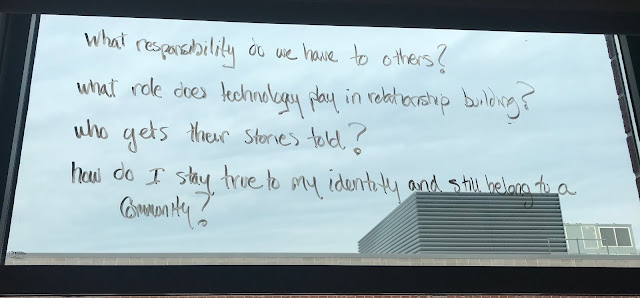
Socratic Seminar - Community/Justice

Why do we feel the need to belong?  How do we maintain our individual identities and be part of a community? What are the benefits and draw...