Showing posts with label Literary Terms. Show all posts
Showing posts with label Literary Terms. Show all posts
Wednesday, September 6, 2017

Tuesday, October 11, 2016
Allegory - Examples and Definition of Allegory
Allegory Definition from http://literarydevices.net/allegory/
Allegory is a figure of speech in which abstract ideas and principles are described in terms of characters, figures and events. It can be employed in prose and poetry to tell a story with a purpose of teaching an idea and a principle or explaining an idea or a principle. The objective of its use is to preach some kind of a moral lesson.Although an allegory uses symbols, it is different from symbolism. An allegory is a complete narrativewhich involves characters, and events that stand for an abstract idea or an event. A symbol, on the other hand, is an object that stands for another object giving it a particular meaning. Unlike allegory,symbolism does not tell a story. For example, Plato in his “Allegory of Cave” tells a story of how some people are ignorant and at the same time, some people “see the light” – stands for an idea and does not tell a story.
Examples of Allegory in Everyday Life
Allegory is an archaic term and used specifically in literary works. It is difficult to spot its occurrence in everyday life, although recently, we do find example of allegory in political debates. The declaration of an ex-US president G.W Bush was allegorical when he used the term “Axis of Evil” for three countries and later the term “allies” for those countries that would wage war against the “Axis”.Allegory Examples in Literature
Below are some famous examples of Allegory in Literature:1. “Animal Farm”, written by George Orwell, is an allegory that uses animals on a farm to describe the overthrow of the last of the Russian Tsar Nicholas II and the Communist Revolution of Russia before WW II. The actions of the animals on the farm are used to expose the greed and corruption of the revolution. It also describes how powerful people can change the ideology of a society. One of the cardinal rules on the farm for the animals is:
'via Blog this'
Friday, October 16, 2015
Ballad
from http://literarydevices.net/ballad/
Ballads, no matter which category they fall in, mostly rely on simple and easy-to-understand language or dialect from its origin. Stories about hardships, tragedies, love and romance are standard ingredients of ballads. This is irrespective of geographical origins.
Another conspicuous element of any ballad is the recurrence of certain lines at regular intervals. Ballads can also be in interrogative form with appropriate answers to every question they ask.
Ballads seldom offer a direct message about a certain event, character or situation. It is left to the audience to deduce the moral of the story from the whole narration.
Distinguishing Features of Ballads
Ballads, no matter which category they fall in, mostly rely on simple and easy-to-understand language or dialect from its origin. Stories about hardships, tragedies, love and romance are standard ingredients of ballads. This is irrespective of geographical origins.
Another conspicuous element of any ballad is the recurrence of certain lines at regular intervals. Ballads can also be in interrogative form with appropriate answers to every question they ask.
Ballads seldom offer a direct message about a certain event, character or situation. It is left to the audience to deduce the moral of the story from the whole narration.
Example #5
“The Ballad of Billy the Kid” is an example of a modern ballad.
‘From a town known Wheeling, West Virginia
Rode a boy with six gun in his hands
And his daring life crime
Made him a legend in his time
East and west of Rio Grande’
‘From a town known Wheeling, West Virginia
Rode a boy with six gun in his hands
And his daring life crime
Made him a legend in his time
East and west of Rio Grande’
Functions of Ballad
Ballads, as stage performance, enjoyed the status of being one of the main sources of entertainment in ancient times. Legends and historical events were narrated in the form of a ballad which would comprise song and dance.
Ballad was a perfect substitute for our current day technology-based entertainment, albeit with more emotional appeal. In the 18th century, the ballad based stage entertainment came to be known as Ballad Opera. According to ballad aficionados, the first formal Ballad opera was staged in the first half of 18thcentury with the theme of “the Beggars Opera”.
'via Blog this'
Ballad was a perfect substitute for our current day technology-based entertainment, albeit with more emotional appeal. In the 18th century, the ballad based stage entertainment came to be known as Ballad Opera. According to ballad aficionados, the first formal Ballad opera was staged in the first half of 18thcentury with the theme of “the Beggars Opera”.
'via Blog this'
Friday, October 24, 2014
The Story and the Storyteller - Holly Nguyen
Holly Nguyen's "Story and the Storyteller" Project
My "Story and The Storyteller" Project :)
Alma - Animated Film #1
Literary terms found in this film:
Foreshadowing: The ending with the next victim.
Protagonist: Alma
Antagonist: The doll shop
Symbolism: The dolls are the victims; the doll shop is a monster eating up the children.
Mr. Hublot - Animated Film #2
Literary terms found in this film:
Situational Irony: When he reassembles the dog and buys a larger home in the end.
Topic: Dedication/Sacrifice
Tuesday, September 23, 2014

Subscribe to:
Posts (Atom)
Featured Post
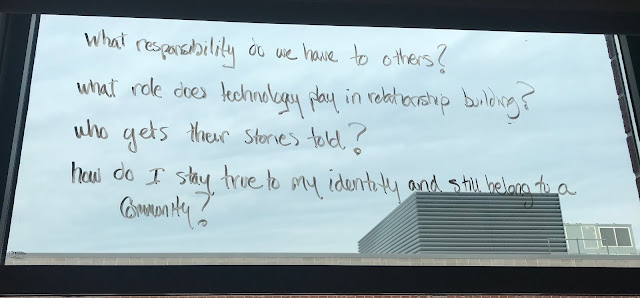
Socratic Seminar - Community/Justice
Why do we feel the need to belong? How do we maintain our individual identities and be part of a community? What are the benefits and draw...
-
Publish your work! Share/Post more of your best quality work on this blog on other publishing venues. This should be work that you are mo...
-
 You can see the full graphic novel of The Odyssey and other works at TumbleBooks.com login information below ...