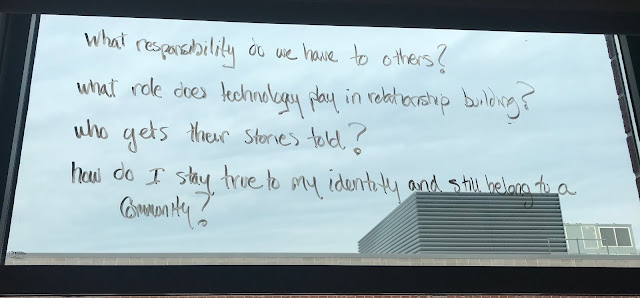
On 12/17(a) and 12/18(b) we will have a Socratic Seminar in class to discuss The Kite Runner. Be able to make connections to the book, consider:
🌍 -text to world
👍👍 -text to self
📖 - text to text
Using our discussion of theoretical lenses, develop insightful, original analyses for each of the questions below. In your responses, you will use textual evidence from the book to support your points, but feel free to be as creative and insightful as possible with your analysis. The important thing is you must support your answers with textual evidence or outside research.
Always use evidence from the book/text to prove your point – and cite the page number!
Be a good participant by sticking to the Excellent criteria of the rubric below.

We will arrange into small groups and each group will have about 30 minutes to discuss the questions with their group. The Inner Circle will be discussing while the Outer Circle will be evaluating.

Always use evidence from the book/text to prove your point – and cite the page number!
Be a good participant by sticking to the Excellent criteria of the rubric below.

We will arrange into small groups and each group will have about 30 minutes to discuss the questions with their group. The Inner Circle will be discussing while the Outer Circle will be evaluating.
- Can you diagnose any of the characters with a mental disorder or mental pathology? If so, whom and why? More importantly, why would the author include this character in the story? That is, how does this character’s mental pathology contribute to an important theme or conflict in the book?
- Some argue that this book incorrectly characterizes Afghanis as either radical terrorists or helpless victims who are reliant on outside help to ameliorate their own domestic problems. What do you make of Hosseini’s characterization of Afghanis and Islam? Does he portray Muslim Afghanis as weak, powerful, or simply human? Support your answer with direct quotes from the text and statistics on the War Against Terrorism?
- Below is a list of secondary characters in the book. Choose one of the characters and explain how he or she is thematically important. That is, characters in books are often representative of entire populations or groups of people, so which group do you think your character represents, and why is this important to consider when reading The Kite Runner?
Secondary characters to explore (Who do they stand for?):
- Rahim Khan
- Farid
- Sanaubar(Sasa), Hassan’s mom and Sohrab’s grandmother
- Kamal and Walid, Assef’s friends
- Soraya, Amir’s wife (you’d have to read a little on your own).
- Secondary characters in Afghanistan (taxi drivers, the beggar who knows Amir’s mother, the young boy selling “sexy pictures”)
- The children of Afghanistan
- Finally, and most importantly, what did you ultimately learn from The Kite Runner? Please look at our opening day activity questions below, and explain how this book either changed (or didn’t change) your perspective regarding your initial stances on these questions. Also, do you think this book should be banned from the classroom? It certainly is one of the most controversial books in our curriculum, so explain why we should or should not continue teaching it as a whole-class text.
1. If you have betrayed a friend, it is always possible to make up for that somehow.
2. The negative actions of our past will always haunt us; there is no way to entirely repent for our past sins.
3. Your race, culture, and class—not your own individual choices—effectively determine your personality, habits and values.
4. In America, movies, television shows, and books do not intentionally or unintentionally perpetuate racial stereotypes. Stereotypes are formed and popularized by other forces.